
How Should a Laboratory Plan Equipment Maintenance?
By Reyami Ventures · 10/15/2026
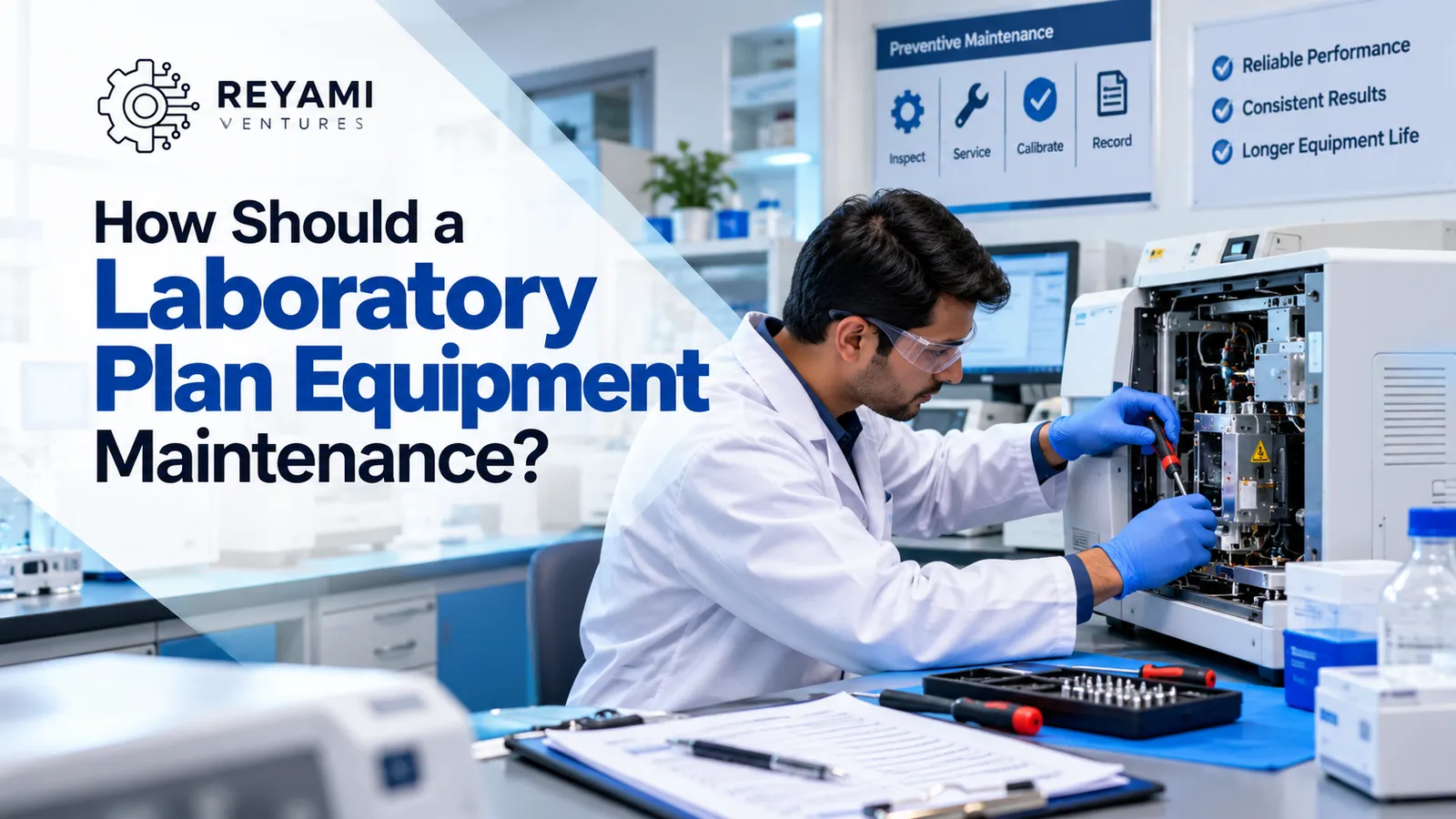
Introduction
Laboratory equipment is often discussed when it is purchased or installed, but the work does not end there. Over time, instruments may need routine care, servicing, calibration or performance checks, depending on their design and intended use. If responsibilities and records are unclear, even a manageable maintenance task can become disruptive.
A useful maintenance plan does not assume that every instrument needs the same service interval or procedure. Instead, it brings together manufacturer guidance, laboratory requirements, equipment history and the practical needs of the people who use the instrument. The questions below can help laboratories structure that planning without replacing instrument-specific instructions or applicable requirements.
What does laboratory equipment maintenance include?
The term can cover different activities, including routine cleaning or care, preventive maintenance, servicing, calibration and performance checks. These activities are not interchangeable, and not every instrument requires the same combination. The laboratory should define applicable tasks using manufacturer instructions, approved procedures and the equipment's intended application.
Why should maintenance be planned before a problem occurs?
Reactive repairs can interrupt work and make it harder to plan around instrument availability. A forward-looking plan helps teams identify upcoming service needs, clarify responsibilities and consider how work will continue if an instrument is unavailable. It does not eliminate breakdowns, but it can make responsibilities and responses clearer.
Where should a laboratory find the correct maintenance requirements?
Start with the manufacturer's documentation and the laboratory's approved procedures. Requirements may also be shaped by the instrument's application, the relevant method and any applicable regulatory or accreditation framework. Avoid applying a generic schedule from another instrument or laboratory without checking that it is suitable.
How should maintenance responsibilities be assigned?
Each maintenance activity should have a clear owner. Laboratory staff may be responsible for routine user-level care, while specialized servicing or calibration may need a qualified service provider. The plan should clarify who schedules the task, who performs it, who reviews the record and who decides whether the instrument can return to routine use.
What information should a service record capture?
Use the fields required by the laboratory's quality system and relevant procedure. Depending on the activity, records may include the instrument identifier, service date, work performed, provider or responsible person, observations, parts replaced and follow-up required. Records should be stored where authorized staff can retrieve them.
How can a laboratory prepare for planned downtime?
Identify whether the instrument can be taken out of service without affecting essential work. Where appropriate, schedule maintenance during a quieter period, communicate the expected downtime and consider approved alternatives or rescheduling. Any alternative instrument or process must be suitable for the intended work and follow laboratory procedures.
What should happen if an instrument appears to be malfunctioning?
Follow the laboratory's procedure for reporting and assessing equipment issues. This may mean stopping use, identifying the instrument as unavailable, informing the responsible person and contacting the authorized service provider. Do not attempt repairs beyond the user's training or authorization, and document the issue and action taken.
How does maintenance relate to calibration and performance verification?
Maintenance, calibration and performance verification serve different purposes, although they may be related in an instrument's lifecycle. Maintenance addresses care or service needs; calibration evaluates the relationship between an instrument's indication and reference values under specified conditions; performance verification checks whether it meets defined criteria for its use. Follow the laboratory's applicable procedures and technical framework.
How can maintenance planning support procurement decisions?
Equipment history can help a laboratory assess recurring service needs, support availability and whether an instrument continues to meet operational requirements. When comparing new equipment, consider maintenance, consumables, service arrangements and user support, rather than evaluating only the purchase price. Confirm specific service commitments directly with the supplier or manufacturer.
What if the original supplier is no longer available?
Identify the manufacturer, exact model and any documentation retained by the laboratory. Then establish whether an authorized or otherwise qualified service route is available and whether parts, software or technical documentation can be obtained. Assess the qualifications of any third-party service option before relying on it.
How should older equipment be evaluated?
Age alone does not determine whether an instrument should be retained or replaced. Consider whether it remains suitable for the intended application, whether service and parts are available, how often it is unavailable, and whether it meets laboratory requirements. Document the decision and involve the people responsible for technical performance, quality and budgeting.
How can a laboratory avoid outdated maintenance records?
Assign responsibility for updating records and make recordkeeping part of the maintenance workflow. Use a consistent instrument identifier and a central location or approved system so information does not remain only in individual emails or paper notes. Review records periodically for missing entries and unresolved follow-up actions.
What should be checked before an instrument returns to routine use?
Return-to-use criteria should be defined in laboratory procedures and reflect the work the instrument performs. Depending on the service event, this may include reviewing service documentation, completing required checks, confirming the instrument's status and ensuring restrictions have been cleared.
When should maintenance planning be reviewed?
Review the plan when equipment is added, moved, repaired, used for a new purpose or repeatedly unavailable. A review may also be needed when manufacturer guidance or laboratory requirements change. Keep the plan aligned with actual equipment use and current responsibilities.
Final Takeaway
Laboratory equipment maintenance is easier to coordinate when tasks, responsibilities, service records and return-to-use decisions are clearly defined. A practical plan should be based on the instrument, the manufacturer's instructions, the laboratory's procedures and applicable requirements, rather than a universal schedule.
When selecting or replacing equipment, include service arrangements and lifecycle needs in the discussion. For broader laboratory product requirements, Reyami Ventures can be contacted, while technical maintenance decisions should be confirmed with the appropriate manufacturer or qualified specialist.
Explore More
Frequently asked questions
Follow manufacturer guidance, laboratory procedures and applicable requirements. No single interval applies to all instruments.
No. They are different activities, although one may lead to a need for the other depending on the instrument and procedure.
Routine user-level care may be performed by trained staff, while specialized work may require a qualified technician or authorized service provider.
Record the details required by the laboratory's procedure, such as instrument identifier, date, work performed, observations and follow-up actions.
Follow approved procedures, instrument guidance and applicable requirements. Consult the responsible technical or quality personnel when uncertain.
No. Assess fitness for purpose, reliability, service availability, operational needs and the costs and risks of continued use.
Reyami Ventures can be contacted to discuss laboratory products and equipment requirements. Instrument-specific maintenance instructions should be confirmed with the manufacturer or qualified service personnel.